
 English
 Español
 Portugues
 Pусский
 Français
 Deutsch
 日本語
日本語 한국어
한국어 العربية
 Italiano
 Nederlands
 Svenska
 Polski
 Türk dili
 हिन्दी
 Indonesia
 Melayu
 dansk
dansk Magyar
 қазақ
қазақ বাংলা
বাংলা עִברִית
 čeština
 українська
 беларускі
 Filipino
 Suomalainen
 اردو
اردو հայերեն
 български
 Hrvatski
 galego
 euskara
 Shqipëria
 Malagasy
 Башҡорт
 Türkmenler
 Ilocano
 Нохчийн


Power Factor Compensation Controller
Power Factor Compensation Controller A Power Factor Compensation Controller (PFCC) is an advanced electronic device designed to optimize the power factor (PF) in electrical systems by dynamically managing reactive power compensation. It plays a crucial role in improving energy efficiency, reducing power losses, and ensuring compliance with utility regulations. Functionality and Operation The PFCC continuously monitors the power factor of an electrical network, typically using current and voltage sensors. Based on real-time measurements, it calculates the required reactive power compensation and controls the switching of capacitor banks or other compensation devices (e.g., reactors, static VAR compensators) to maintain a near-unity power factor (typically between 0.95 lagging and 0.95 leading). Key operational features include: - Automatic Detection: Identifies inductive or capacitive loads and adjusts compensation accordingly. - Step Control: Engages or disconnects capacitor banks in stages to prevent overcompensation. - Harmonic Filtering: Some models include harmonic suppression to avoid resonance issues in networks with nonlinear loads. - Protection Mechanisms: Prevents damage from overvoltage, overcurrent, or excessive temperature. Benefits of Power Factor Compensation 1. Energy Efficiency: Reduces reactive power demand, lowering line losses and improving overall system performance. 2. Cost Savings: Minimizes penalties from utilities for poor power factor and reduces electricity bills. 3. Enhanced Equipment Lifespan: Decreases stress on transformers, cables, and switchgear by optimizing current flow. 4. Voltage Stability: Helps maintain stable voltage levels, especially in industrial settings with fluctuating loads. Applications PFCCs are widely used in: - Industrial plants with heavy motor loads (e.g., pumps, compressors). - Commercial buildings with HVAC systems and lighting networks. - Renewable energy systems to comply with grid interconnection standards. Advanced Features Modern PFCCs incorporate: - Digital Signal Processing (DSP): For precise measurement and fast response. - Communication Interfaces (Modbus, Ethernet): Enables remote monitoring and integration with SCADA systems. - Adaptive Algorithms: Adjusts compensation strategies based on load variations. Conclusion A Power Factor Compensation Controller is essential for maintaining efficient and reliable electrical systems. By automating reactive power management, it ensures optimal energy usage, reduces operational costs, and enhances grid stability. Its adaptability makes it suitable for diverse applications, from small facilities to large industrial complexes. (Word count: 500)
उत्पादन
वर्गीकरण:
Controller
-
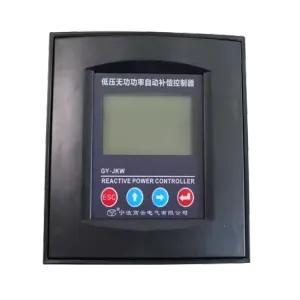
Controller For Reactive Power Compensation
श्रेणी: Controllerदृश्यहरू: 43क्रम संख्या:रिलीज समय: 2025-12-18 14:32:25Insight and Industrial Applications Reactive power compensation is a foundational element of modern power distribution design, particularly in industrial and commercial electrical systems where efficiency, equipment reliability, and regulatory compliance are paramount. At the heart of effective compensation systems lies an intelligent controller that governs how reactive power is measured, managed, and corrected in real time. This article examines the role, technology, structural characteristics, performance determinants, procurement considerations, common challenges, application scenarios, and future trends associated with controllers for reactive power compensation.
समाचार
वर्गीकरण:
अहिलेसम्म कुनै खोज परिणामहरू छैनन्!
त्यो घटना
वर्गीकरण:
अहिलेसम्म कुनै खोज परिणामहरू छैनन्!
भिडियो
वर्गीकरण:
अहिलेसम्म कुनै खोज परिणामहरू छैनन्!
डाउनलोड गर्नुहोस्
वर्गीकरण:
अहिलेसम्म कुनै खोज परिणामहरू छैनन्!
भर्ती
वर्गीकरण:
अहिलेसम्म कुनै खोज परिणामहरू छैनन्!



 व्हाट्सएप
 टेलिफोन